 PROF. DR.LEVENT PEŞKİRCİOĞLUUrology & Andrology in Turkey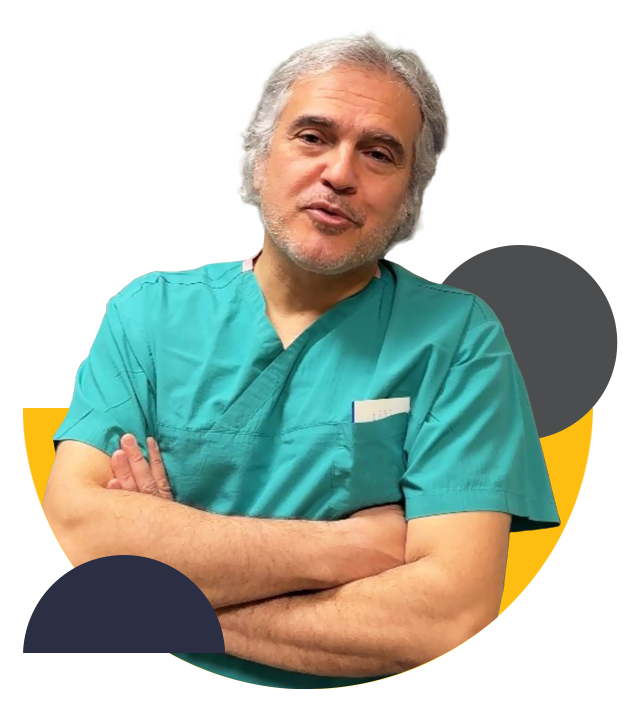
Prof. Dr. Levent Peşkircioğlu was born in Ankara in 1966 and completed his primary and secondary education at TED Ankara College. He graduated from Hacettepe University English Faculty of Medicine in 1990 and received his urology specialist title from Ankara Training and Research Hospital in 1995.
 1984-1990Hacettepe University Medical Education
 1990-1995Ankara E.A. Hospital Specialization
 2007Professor at Başkent University
Prof. Dr. Levent Peşkircioğlu was born in Ankara in 1966 and completed his primary and secondary education at TED Ankara College. He graduated from Hacettepe University Faculty of Medicine (English program) in 1990 and received his specialization in urology at Ankara Training and Research Hospital in 1995.
He worked as a faculty member in the Department of Urology at Başkent University Faculty of Medicine for 25 years and was awarded the title of Professor in 2007. Dr. Peşkircioğlu served as the Chief Coordinator of Medical Education and also as Vice Dean of the Faculty of Medicine.
He played a founding role in the establishment of the Turkish Andrology Academy and served as its Secretary General. He has authored numerous national and international publications and presentations, mainly focusing on sexual and reproductive function. He is also an active member of the American College of Surgeons.

Erectile dysfunction treatment in Turkey is planned according to the underlying cause and individual needs. Treatment options may include medications, shockwave therapy, penile injections, vacuum devices, and penile implants, with personalized evaluation by Prof. Dr. Levent Peşkircioğlu.
MORE
Erectile dysfunction, also known as impotence, is the inability to achieve or maintain an erection sufficient for sexual intercourse. It is a common condition that can affect men of all ages, but it becomes more prevalent with age. The treatment of erectile dysfunction depends on the underlying cause and the severity of the condition.
MORE
Shockwave therapy for erectile dysfunction in Turkey (Li-ESWT) is a non-invasive treatment mainly used for selected men with vasculogenic ED. It aims to improve penile blood flow and erectile function without surgery, injections, or anesthesia.
MORE
Penis enlargement refers to medical procedures aimed at increasing the girth (diameter) of the penis for aesthetic or functional purposes. Some men may be dissatisfied with the size of their penis or may wish to improve sexual confidence and function. In this context, penis enlargement procedures are generally performed for cosmetic reasons, although in some cases they may also be based on medical indications.
MORE
Penile prosthesis surgery in Turkey is a surgical treatment for men with severe erectile dysfunction who do not respond to other therapies. Inflatable or malleable implants can provide reliable penile rigidity, with treatment planned according to anatomy, health status, and patient expectations.
MORE
Peyronie’s disease (penile curvature) is a condition caused by the formation of fibrous plaques inside the penis, leading to an abnormal bending of the penis during erection. It may be associated with pain, difficulty during sexual intercourse, and erectile dysfunction, and can negatively affect quality of life.
MORE
Penis filler in Turkey is a minimally invasive treatment designed to increase penile girth and improve shaft fullness. Most commonly performed with hyaluronic acid, the procedure offers a non-surgical option for men seeking a natural-looking increase in circumference.
MORE
Penile enlargement surgery in Turkey includes surgical and minimally invasive procedures designed to increase penile length, girth, or visible shaft exposure. Treatment should be individually planned according to penile anatomy, patient expectations, and the specific cause of concern.
MORE
Premature ejaculation treatment includes a range of medical and therapeutic approaches designed to improve ejaculatory control during sexual intercourse. Depending on the underlying cause, treatment may involve medications, behavioral techniques, psychological counseling, and natural or lifestyle-based strategies. Effective treatment can enhance sexual satisfaction for both partners while significantly improving confidence, intimate relationships, and overall quality of life.
MORE
Penile Curvature Surgery is a reconstructive procedure performed to correct congenital or acquired penile curvature. Depending on the severity and underlying cause of the deformity, techniques such as penile plication, plaque incision or excision with grafting, or penile prosthesis implantation may be used to restore penile straightness, preserve sexual function, and improve overall quality of life.
MORE
Varicocele is the enlargement of the veins within the scrotum (the pouch of skin that holds the testicles). These veins are called the pampiniform plexus and form a network responsible for draining blood from the testicles. When these veins become dilated or swollen, they can disrupt normal blood flow and may lead to discomfort in the testicles, reduced sperm quality, and infertility.
MORE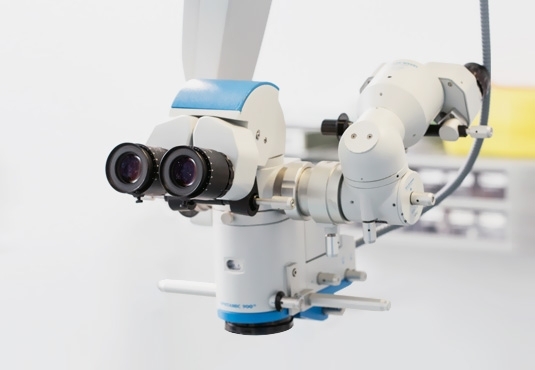
In men with no sperm in the ejaculate, sperm can be searched directly in the testis using a microscopic surgical technique called Micro-TESE. Sperm obtained can be used fresh or frozen for future use if sufficient numbers are retrieved. In recent years, the ROSI technique has also offered reproductive potential in some cases where no sperm is found even with Micro-TESE, by using round spermatids from testicular tissue.
MORE
Urinary tract stones can cause problems by leading to pain as well as obstruction in the urinary system, and may result in kidney damage. We treat stone disease using advanced endoscopic, minimally invasive (closed) techniques with laser lithotripsy.
MORE
Ureteral stone treatment is planned according to the number, size, and location of the stones. In general, stones smaller than 4 mm pass spontaneously. For ureteral stones measuring between 4 mm and 10 mm, the likelihood of spontaneous passage is approximately 50%. Some of these stones may pass on their own, while in other cases medical therapy may be used to facilitate stone passage.
MORE
In prostate diseases, which are among the most common conditions in men, it is very important to determine whether the disease is benign or malignant. For this condition, we use surgical methods such as plasma kinetic surgery and HoLEP, as well as medical treatments. The most appropriate treatment varies for each patient; therefore, there is no single “best” treatment method for everyone.
MORE
Blood in the urine is an important finding, and its underlying cause must be investigated. Imaging methods and, if necessary, cystoscopy—an endoscopic procedure that allows direct visualization of the inside of the bladder—can be used to detect benign or malignant lesions within the bladder and guide appropriate treatment. In couples who are unable to conceive, the cause is attributable to the male partner in approximately 50% of cases. The majority of these causes are identifiable and treatable conditions.
MORE
Urinary incontinence in both men and women can result from many different causes, and there is no single cause or single treatment for it. We diagnose the underlying reasons and treat the condition using either medication or surgical methods.
MORE Prof. Dr. Levent PeşkircioğluUrology & Andrology

 Appointment Request
 Patient Reviews
 Photo Gallery
 Topic Videos
 Affiliated Hospitals
My husband underwent prostate surgery on Thursday. We would like to sincerely thank Dr. Levent and Dr. Alev, the anesthesiologist, as well as all the nurses at the hospital, especially Nur{...}
09 October 2025For one year, I had been searching for a good doctor. During this period, I took my son to two different public hospitals, but we did not get any positive results. While doing research on{...}
07 June 2025We visited many supposedly top doctors in both private and university hospitals for my husband’s urinary tract obstruction. Unfortunately, the procedures we underwent were short-term and l{...}
07 April 2024